
TL;DR
- Unitree publishes the widest spread of real prices — $4,290 (R1-D) to $100,000 (H2 Plus).
- AgiBot, LimX, EngineAI and 1X also put real numbers in front of customers.
- Figure 03, Tesla Optimus, Boston Dynamics Atlas, Apptronik Apollo and others have no comparable public price.
- An old model's price, a CEO's target, or an analyst's guess is not an MSRP. Check what a number actually is before repeating it.
You can spend ten minutes searching for a humanoid robot price and end up with ten different answers. Figure 03 costs $130,000. Optimus will cost $20,000. Atlas is $130,000. Or $320,000. Memo is $10,000. Most of those numbers are not prices. The cleanest answer right now is less exciting and much more useful: the humanoids with public prices run from roughly $4,290 to $100,000. A much larger group has no public price at all. Let's start with the companies willing to put a number on a page.
The Ones You Can Actually Buy
Unitree
Unitree is the easiest benchmark. Its own shop lists the R1-D from $4,290, R1 from $4,900, G1 at $13,500, H2 at $29,900, and H2 Plus at $100,000.
The range covers very different machines. The R1 is a small, relatively light humanoid built around movement and general experimentation. The G1 is the more serious development platform, with configurable degrees of freedom, dexterous-hand options and the software tools Unitree provides for research and secondary development. The H2 steps into full-size territory: Unitree lists it at 180 cm, 31 DOF and up to 360 N·m of joint torque, with onboard computing aimed at more demanding tasks. The $100,000 H2 Plus goes further again, with 75 total body-and-hand DOF, 22 active hand DOF, stereo vision, wrist cameras and a Jetson Thor compute platform, plus a larger manipulation payload.
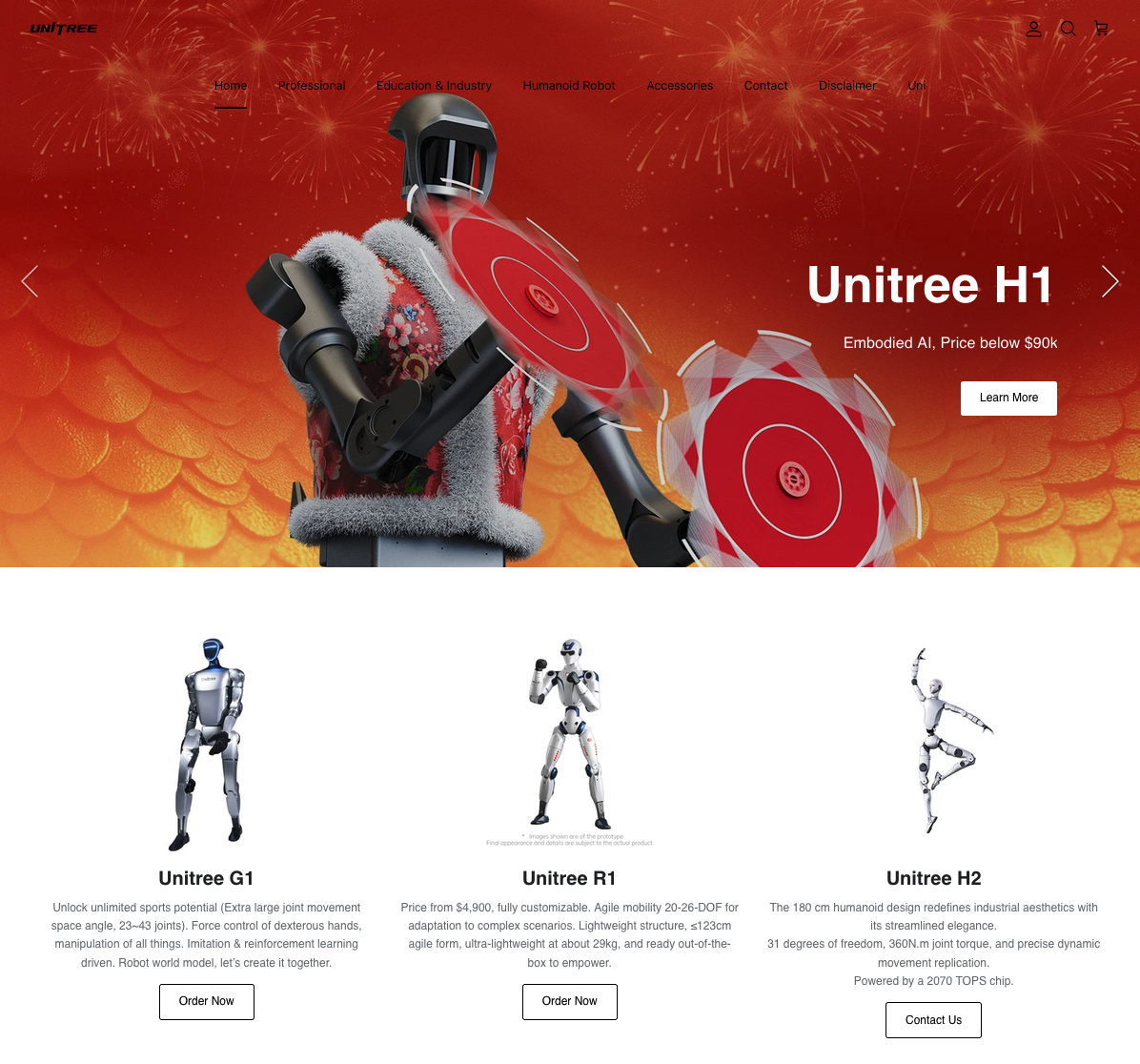
Unitree Official Store (Image credit: Unitree)
There is a reason Unitree keeps showing up whenever people talk about humanoid-robot prices. The company says it sold and delivered more than 5,500 humanoid robots in 2025, so this is not just a catalog of prototypes. It is one of the few manufacturers with both a public price ladder and meaningful shipment volume.
AgiBot
AgiBot is another manufacturer with price transparency on a store page, although its range is less tidy. The company's store lists the A2 Lite at $44,560 and the X2 at $24,240. Its A3 Ultra, X2 Ultra and A2 Ultra are listed with “Contact Us” instead of a public price.
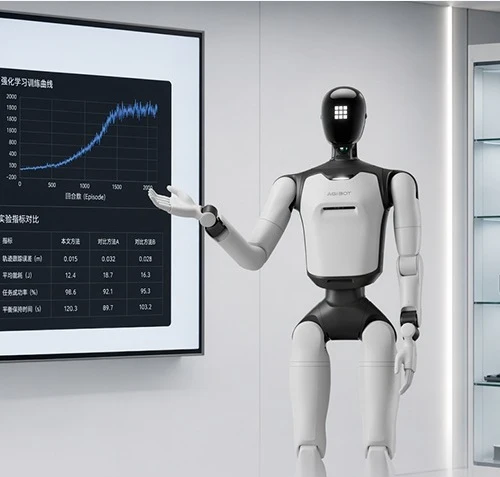
Agibot A3 Ultra Robot (Image credit: Agibot)
The two priced models are aimed at different jobs. The A2 Lite is a 169 cm, 64 kg humanoid designed for commercial performance and interaction, with a 2 kg rated single-arm load and optional higher-end sensing and compute hardware. The X2 is smaller at about 131 cm and 35 kg, with 25 DOF, a 3 kg payload and a sensor stack built around visual, voice and tactile interaction. AgiBot also markets autonomous navigation, obstacle avoidance and fleet-control tools around the platform.
AgiBot is also a useful counterpoint to Unitree on volume. Industry research from Counterpoint estimated more than $140 million in AgiBot humanoid sales revenue in 2025, ranking it first globally on that measure. That is an industry estimate rather than a company-reported humanoid revenue figure, so I would keep the attribution attached to it. Unitree, meanwhile, has publicly disclosed more than 5,500 humanoid deliveries.
LimX Dynamics
LimX Luna, launched in May 2026, is priced at ¥298,000 in China (roughly $41,000–$44,000 depending on exchange rate). The company said international pricing would be disclosed separately. The first 100 Chinese buyers received a ¥40,000 launch discount.
EngineAI
EngineAI offers four T800 configurations. Its official English pricing lists the Basic Edition at $40,500, Open Source Edition at $54,000, Pro Edition at $63,000 and Max Edition at $80,800. EngineAI’s Chinese materials list the corresponding prices at ¥180,000, ¥240,000, ¥280,000 and ¥360,000. The company describes the four tiers as Basic, Open Source (Eco), Pro (Enhanced) and Max (Flagship), aimed at different use cases including research and education, inspection, commercial services, logistics and industrial work.
1X
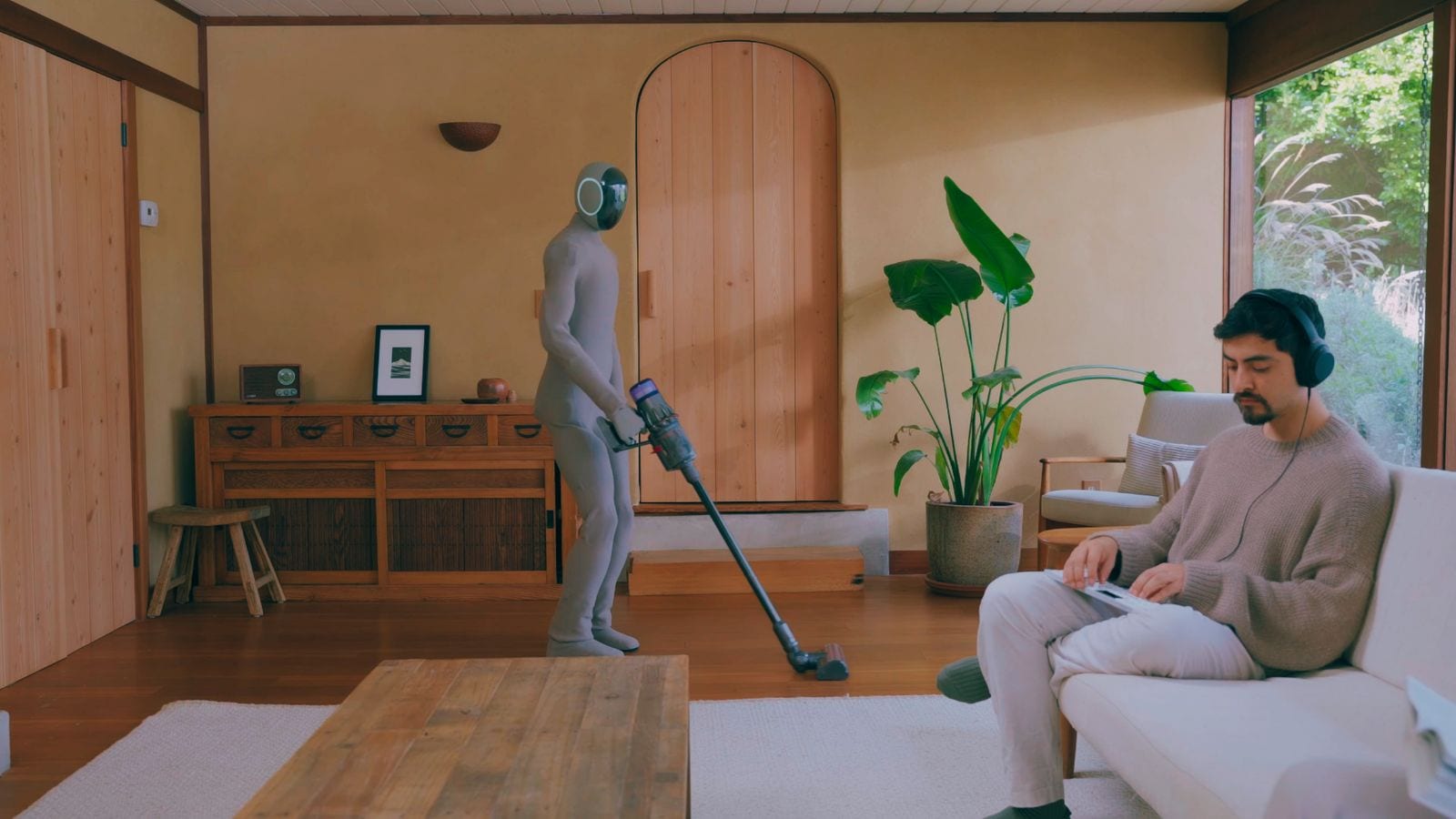
1X Neo doing chores (Image credit: 1X)
Then there is 1X, which has taken a different route. Its NEO is offered at $20,000 for early access, with a $200 deposit and priority delivery in 2026, or $499 per month under a subscription model. 1X says U.S. deliveries start in 2026 and other markets follow in 2027.
So the part of the market that actually has prices looks like this:
| Robot | Current public price |
|---|---|
| Unitree R1-D | From $4,290 |
| Unitree R1 | From $4,900 |
| Unitree G1 | $13,500 |
| 1X NEO | $20,000 or $499/month |
| AgiBot X2 | $24,240 |
| Unitree H2 | $29,900 |
| EngineAI T800 | $40,500–$80,800 |
| LimX Luna | ¥298,000 in China |
| AgiBot A2 Lite | $44,560 |
| Unitree H1 | About $90,000; quote-gated |
| Unitree H2 Plus | $100,000 |
A launch price is not a lifetime price. EngineAI's older SE01, for example, launched at ¥88,000, about $12,000, but is now quote-based. Still, these are the numbers I would use when someone asks what a humanoid robot costs today.
The Number the CEO Said Is Not the Number You'll Pay
Physical AI companies are unusually good at talking about future economics. That is partly unavoidable. Most of these businesses are trying to get from a few machines in controlled environments to thousands of machines doing repetitive work. The price they want five years from now matters to the business. It just does not answer what a customer pays now.
Musk's Optimus number is the obvious example, although Tesla gives people a lot of material to work with. Elon Musk has repeatedly talked about a long-term $20,000–$30,000 consumer price target, tied to much higher production volumes. It is a future ambition, not an MSRP for an Optimus sitting in a warehouse waiting to be shipped to your home. The same goes for analyst estimates of current Optimus build cost in the $50,000–$100,000 range. That's an estimate of what the hardware may cost to produce, not what Tesla charges a customer.
Brett Adcock has made a similar economic argument for Figure: a $20,000–$30,000 working humanoid could compare favorably with the cost of human labor in certain jobs. In May 2026, he also floated $400–$600 per month as a possible home-robot leasing model. No offers are available yet for the retail customer. There is no Figure 03 checkout page or public MSRP. No consumer preorder flow that lets you put down a deposit and buy one. Figure's public activity is centered on commercial deployments and partnerships, including the heavily publicised BMW project. So if a page says Figure 03 costs $130,000, ask where that came from.
Boston Dynamics Atlas is another example. The company has never published a customer price for Atlas. Different sources have reported a figure of about $320,000, citing unnamed people familiar with the plan. Independent estimates around $130,000–$145,000 also circulate. None is a published Atlas price.
The Price Hidden in the Fine Print
Some robots have something better than a storefront price: financial disclosures. Agility's Digit is the clearest example.
In Agility Robotics and Churchill Capital Corp XI's 2026 SEC Form S-4, the company describes a Robot-as-a-Service model of roughly $8,500 per month plus a $25,000 deployment fee. The direct-purchase model is roughly $200,000, plus a $20,000 deployment fee and about $36,000 a year in maintenance. The filing also gives five-year revenue figures of about $535,000 per robot under RaaS versus $400,000 under purchase economics.
That is a much better picture of Digit's economics than saying "Digit costs $200K." The $200,000 number is only one piece of the commercial arrangement.
UBTECH gives us another useful case. Its 2025 annual report does not put a simple Walker S2 MSRP on the store page. But the company's reported sales imply an average revenue of roughly $106,000 per full-size humanoid unit sold. That comes from the company's filed figures, not a third-party price list.
Leju's filings give another data point. Its ChiNext IPO prospectus shows the average selling price for Kuavo falling from ¥413,900 in 2024 to ¥308,100 in 2025, roughly $45,500 at the latter level. I would not rewrite that as "the Kuavo costs $45,500." just because the filing quotes an average selling price.
Why So Many Have No Public Price
"No public price" covers several very different situations.
- Figure 03: commercial deployment, no normal public purchase path.
- Tesla Optimus: not orderable, no MSRP, and no paying-customer product at the time covered by the supplied research.
- Boston Dynamics Atlas: production is committed to defined Hyundai and Google DeepMind programs rather than sold through a public price list.
- Apptronik Apollo: enterprise business, quote-based, with deployments and pilots involving Mercedes-Benz, GXO and Jabil.
- Sanctuary Phoenix: never a normal retail product; in 2026 the company shifted its commercial emphasis toward the AI software layer rather than selling the humanoid as a standalone product.
Then there are robots that are technically closer to market but still don't have a clean number.
- Astribot S1 has been sold B2B in China by quotation since August 2024, but Astribot does not publish a price on its own site.
- Fourier GR-2 has no reliable official price I would put in a table.
- XPeng Iron has no official price while the company targets series production by the end of 2026 and commercial launch in 2027.
- Robot Era Star1 has conflicting claims around $50,000 and $120,000, neither confirmed by the company.
- Galbot is especially messy. A JD.com flash sale showed ¥630,000 for two units, roughly $91,000 each. It is not a standing Galbot price, and the company describes pricing as on inquiry.
- Sunday Robotics Memo is further back still. The company disclosed an approximately $20,000 hand-build cost at its November 2025 launch and said it was targeting below $10,000 at scale. Its Founding Family beta is running through 2026. There is no general consumer sale yet.
All of these machines can appear in the same search results. They should not appear in the same pricing column.
What You're Really Paying For
The cheap number on a humanoid is not necessarily the cheap way to deploy one.
You cannot compare a $4,290 Unitree R1-D with Digit's roughly $200,000 purchase model. They're selling different things. One is a piece of relatively inexpensive hardware that happens to look humanoid and is aimed at R&D and student projects. The other is an industrial deployment that comes with software, integration, service and maintenance.
The same problem appears in reverse with the robots that have no public price. An enterprise quote can include things a consumer MSRP would never show: deployment work, integration, training, software access, support, maintenance and the engineering required to make the thing useful in a real facility.
So there are really two questions:
What does the robot cost?
And:
What does it cost to put the robot to work?
Why This Matters
Humanoid robot pricing is currently a mess of real prices, sales quotes, targets, estimates and old numbers wearing new model names.
The good news is that the real numbers are not especially hard to find once you stop mixing the categories.
You can buy a Unitree for thousands or tens of thousands of dollars. You can preorder 1X NEO for $20,000 or subscribe for $499 a month. LimX, EngineAI and AgiBot publish real figures. Agility discloses much more detail in its SEC filing. Leju's filings show what actual selling prices look like as the market gets more competitive.
And for Figure 03, Optimus, Atlas, Apollo and several others, the correct answer is still no public price.
My take: this is what an immature industry looks like from the outside. Dozens of companies are racing to ship hardware before anyone has agreed on what a humanoid robot needs to do reliably. So there's no shared benchmark and no shared price. Give it a few years, the market will consolidate, and most of the companies still hiding behind "Contact Us" won't be around.