
Phoenix (Gen 8)
Industrial humanoid robot platform built around Carbon, Sanctuary AI's proprietary physical AI system
Contact for Pricing
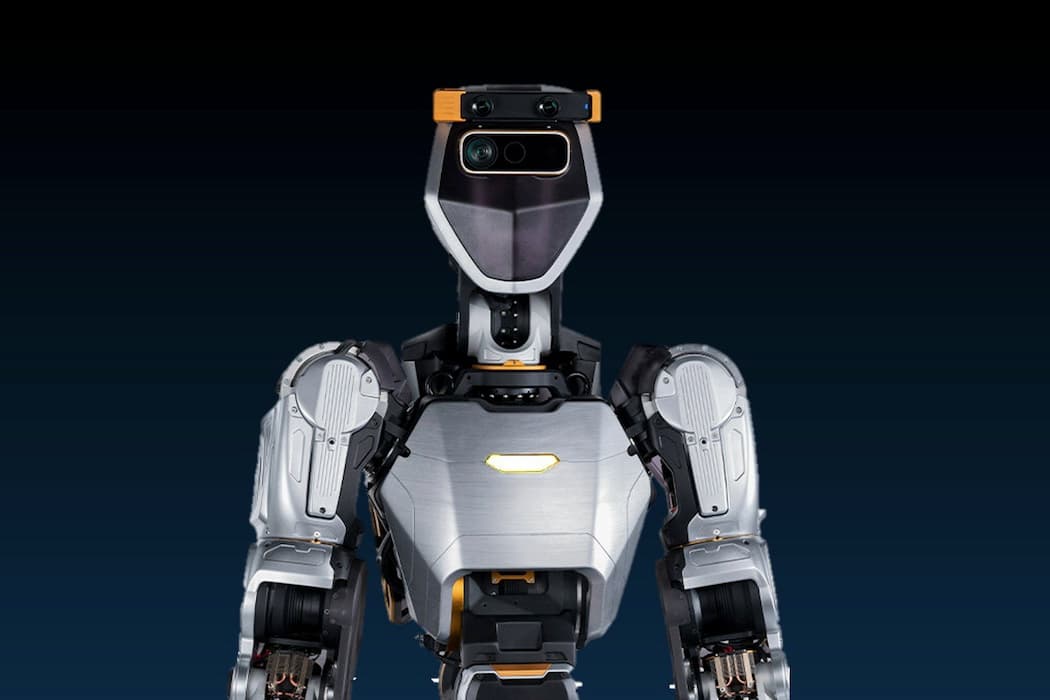
Technical Details
Specifications
| Height | 1.7 m / 5' 7'' |
|---|---|
| Weight | 70 kg / 154.3 lb |
| Degrees of Freedom | — |
| Locomotion | wheeled |
| Payload | 25 kg |
| Battery Type | — |
| Speed | 1.33 m/s |
| Rated Runtime | — |
Sensors
| Cameras | — |
|---|---|
| Depth Sensing | Yes |
| Lidar | Not disclosed |
| IMU | Not disclosed |
| Microphones | Not disclosed |
| Tactile Sensing | 7-cell micro-barometer arrays in fingerpads, detecting forces down to 5 millinewtons |
Software
| Control Mode | autonomous, teleoperation |
|---|---|
| Middleware | — |
| SDK | Proprietary |
| SDK Details | Carbon AI platform, not publicly available standalone; now licensed for third-party hardware |
| Connectivity | — |
Deployment
Units Shipped: Not publicly disclosed
As of Aug 2026
Company Claim
Sanctuary states its robots have been tested across 400 customer-defined tasks across 15 industries, references a '100 Phoenix' commercial pilot program, and names Magna International (investor, contract manufacturer, and end-user) and Microsoft (AI research collaboration) as confirmed partners
What's Actually Confirmed
Independent verification of current pilot scale and results is limited. One industry review found Sanctuary's most concretely documented 2026 performance metric (99.5% wire-plugging success) was achieved by Carbon software on an industrial arm, not a Phoenix humanoid. A Canadian Tire pilot is referenced in one industry summary but not independently corroborated
Magna International
Magna manufacturing facilities
| Task | Automotive manufacturing pilot; Magna also holds an investor and contract-manufacturer relationship with Sanctuary, per The Robot Report |
|---|---|
| Stage | Pilot |
| Start Date | Apr 2024 |
| End Date | — |
Microsoft
Not specified
| Task | AI research collaboration advancing general-purpose robotics |
|---|---|
| Stage | Agreement |
| Start Date | May 2024 |
| End Date | — |
Frequently Asked Questions
What is the Phoenix (Gen 8) and who makes it?
Phoenix (Gen 8) is an industrial humanoid robot platform built around Carbon, Sanctuary AI's proprietary physical AI system. It is manufactured by Sanctuary AI and was announced in 2025.
How tall is the Phoenix (Gen 8)?
Phoenix (Gen 8) is 1.7 m / 5' 7'' tall.
How much does the Phoenix (Gen 8) weigh?
Phoenix (Gen 8) weighs 70 kg / 154.3 lb.
How much can the Phoenix (Gen 8) carry?
Phoenix (Gen 8) can carry a payload of 25 kg.
How much does the Phoenix (Gen 8) cost? Is the Phoenix (Gen 8) available to buy?
Sanctuary AI has not published a price for the Phoenix (Gen 8) — it is quoted on enquiry. No public pricing disclosed. Contact Sanctuary AI directly. A third-party estimate of ~$65,000 circulates but is not confirmed by Sanctuary.
What are the main strengths of the Phoenix (Gen 8)?
- Most advanced tactile sensing of any humanoid currently documented — 5 millinewton detection threshold
- 20 DoF per hand with hydraulic actuation for high power density
- Deep three-way relationship with Magna International (investor, manufacturer, and end-user), not just a customer pilot
- Confirmed Microsoft AI research collaboration
What are the limitations of the Phoenix (Gen 8)?
- Wheeled base limits deployment to flat or semi-structured environments
- Most concretely documented 2026 performance metric was achieved on an industrial arm, not the Phoenix humanoid itself
- No public pricing or independently verified task benchmarks specific to Phoenix
- Compute specifications not disclosed
- Company underwent significant leadership turnover in 2024–2026 — see Sanctuary AI's manufacturer profile for details, relevant to assessing organizational stability
Related Humanoids



Last updated: Aug 2026