
Apollo
Commercial humanoid robot for logistics and manufacturing environments
Contact for Pricing
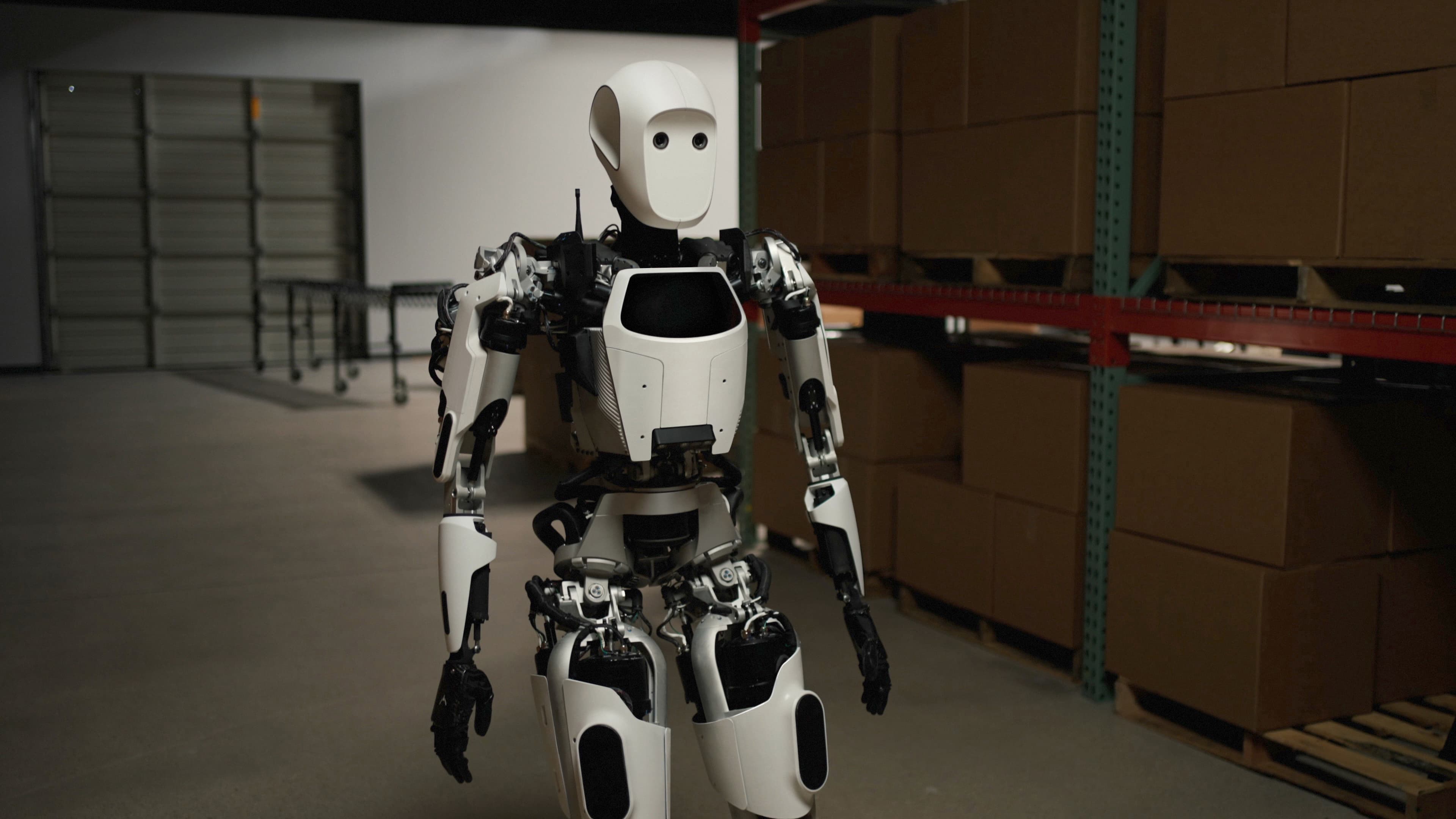
Technical Details
Specifications
| Height | 1.73 m / 5' 8'' |
|---|---|
| Weight | 72.5 kg / 160 lb |
| Degrees of Freedom | — |
| Locomotion | biped |
| Payload | 25 kg |
| Battery Type | — |
| Speed | Undisclosed |
| Rated Runtime | 4 h |
Sensors
| Cameras | — |
|---|---|
| Depth Sensing | Yes |
| Lidar | Not disclosed |
| IMU | Yes |
| Microphones | Not disclosed |
| Tactile Sensing | force-aware manipulation and collision detection |
Software
| Control Mode | autonomous, teleoperation, hybrid |
|---|---|
| Middleware | — |
| SDK | Proprietary |
| SDK Details | Artemis whole-body control, Fleet Connect fleet management |
| Connectivity | — |
Deployment
Units Shipped: Not publicly disclosed
As of Aug 2026
Company Claim
Apptronik names Mercedes-Benz and GXO Logistics as pilot/data-collection partners and Jabil as a manufacturing partner to build Apollo robots at scale, with Apollo 2 targeting six commercial use cases across fulfillment, kitting, and material handling
What's Actually Confirmed
Apptronik itself describes Apollo 3, not Apollo 2, as its 'first true commercial product' — indicating Apollo and Apollo 2 remain pilot/data-collection platforms rather than scaled commercial deployments, consistent with no public pricing or general sales channel existing for either generation
Mercedes-Benz
Berlin-Marienfelde Digital Factory Campus; Kecskémet, Hungary
| Task | Data collection and pilot trials in a production environment |
|---|---|
| Stage | Pilot |
| Start Date | Mar 2024 |
| End Date | — |
GXO Logistics
Not specified
| Task | Early-stage proof-of-concept, multi-phase R&D program |
|---|---|
| Stage | Pilot |
| Start Date | Jun 2024 |
| End Date | — |
Jabil
Not specified
| Task | Manufacturing partnership to build Apollo robots at scale |
|---|---|
| Stage | Agreement |
| Start Date | Feb 2025 |
| End Date | — |
Frequently Asked Questions
What is the Apollo and who makes it?
Apollo is a commercial humanoid robot for logistics and manufacturing environments. It is manufactured by Apptronik and was announced in 2023.
How tall is the Apollo?
Apollo is 1.73 m / 5' 8'' tall.
How much does the Apollo weigh?
Apollo weighs 72.5 kg / 160 lb.
How much can the Apollo carry?
Apollo can carry a payload of 25 kg.
How much does the Apollo cost? Is the Apollo available to buy?
Apptronik has not published a price for the Apollo — it is quoted on enquiry. Apollo is currently available only through enterprise pilot and data-collection partnership programs. No public pricing for Apollo or Apollo 2; Apptronik has said Apollo 3 will be its first true commercial product.
What are the main strengths of the Apollo?
- 25 kg payload capacity suitable for industrial handling (2023-generation figure)
- Designed for human-centric industrial environments with modular bipedal/wheeled/stationary configurations
- Swappable battery architecture
- Named enterprise pilot partners (Mercedes-Benz, GXO) plus a manufacturing partnership (Jabil)
What are the limitations of the Apollo?
- No manufacturer-published degrees of freedom or walking speed for any Apollo generation
- Apollo 2's own physical specs not published — current record relies on unconfirmed 2023-era figures
- No public pricing information
- Apptronik itself frames Apollo 3, not Apollo 2, as its first true commercial product — large-scale deployment maturity remains unproven
Related Humanoids




Last updated: Aug 2026