A New Blueprint for the Future
- At Tesla's 2025 Annual Shareholder Meeting, Musk told investors the company no longer thinks of itself as a car company. It's positioning itself as an AI and robotics company.`
- The stated goal: "sustainable abundance," Musk's term for a world where people can have whatever goods and services they want without it costing the planet. Optimus is the mechanism.
- This is Tesla's own framing of its purpose, delivered at a meeting where shareholders had just approved a pay package for Musk worth close to $1 trillion, tied in part to Optimus production targets.
- What follows are five of Musk's claims from that meeting, in his words, and what it would actually take for each one to hold up.
TAKEAWAY #1
A Whole New Book
Musk opened by retiring Tesla's old mission statement, accelerating the transition to sustainable energy, in favor of something bigger.
"...what we're about to embark upon is not merely a new chapter of the future of Tesla but a whole new book." — Elon Musk
The new framing is "sustainable abundance": a future, in Musk's telling, where anyone can have any good or service they want without it costing the planet. That's the pitch, and it's still just a pitch. There's no Tesla filing, roadmap, or product spec that defines "sustainable abundance" in numbers. It's a phrase, delivered minutes after shareholders voted Musk a pay package that could be worth close to $1 trillion if Tesla hits a set of targets, Optimus production chief among them. The mission statement and the incentive structure point in the same direction.
TAKEAWAY #2
Tens of Billions of Robots, by His Math
Musk's own numbers do the work here better than any adjective could. He told shareholders "every human on earth is going to want to have their own personal R2-D2 C-3PO," and that industrial demand would add "three to five robots in industry for every... one that's a personal robot." Multiply that out and you get his headline figure: "tens of billions of Optimus robots out there."
From there the claims compound. Musk said AI and robotics could "increase the global economy by a factor of ten or maybe one hundred," and that Optimus, at that scale, is "kind of like an infinite money glitch."
"Optimus is kind of like an infinite money glitch." — Elon Musk
The jump worth pausing on is from "robots could be useful" to "Optimus will actually eliminate poverty." That's his phrase, not a hedge. Poverty isn't a manufacturing shortfall. It's a distribution problem and a political one, and nothing said at the meeting addressed how billions of privately owned robots solve either.
TAKEAWAY #3
Tesla's Case for Why It's Already Winning
Tesla's argument for itself is that it's already "the biggest robot manufacturer in the world," because, as Musk put it, every car the company makes is a robot. Optimus is just "a robot with arms and legs as opposed to a robot with wheels." The logic: a decade spent building batteries, motors, power electronics, and vision-based driving software at scale should transfer directly to building humanoid robots at scale.
It's a tidy argument, made by the company with the most to gain from people believing it. Batteries and motors aren't hands. Musk named the three problems Tesla says it has solved where rivals haven't, hand dexterity, AI that navigates the unstructured real world, and manufacturing volume, and called all three "super difficult." Tesla is the only company claiming to have cracked all three at once. Whether that claim survives a real factory floor is a different question from whether it makes a clean slide.
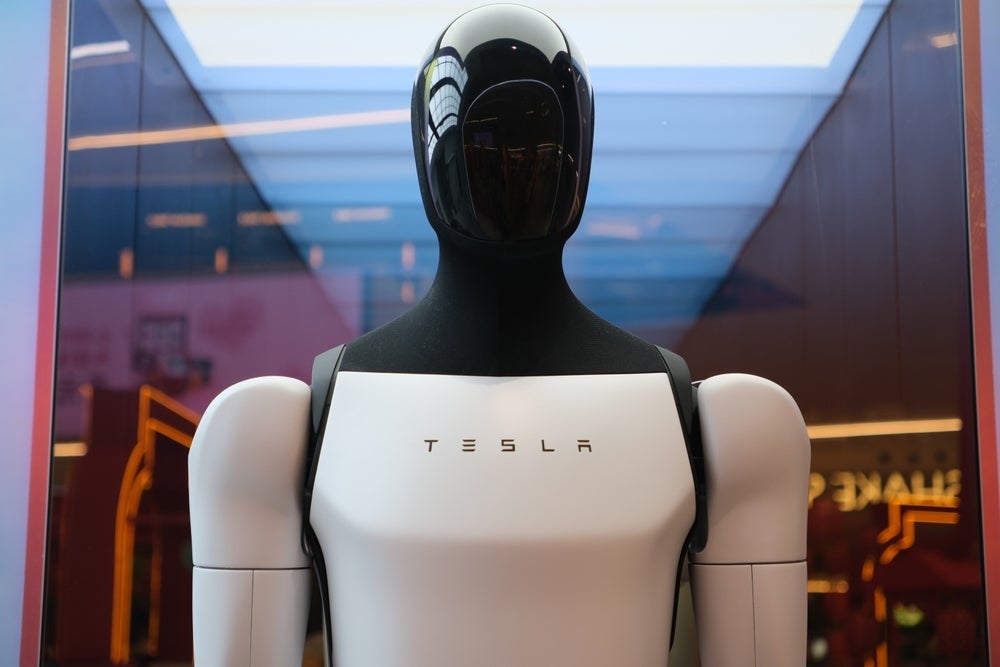
Optimus humanoid robot(Image credit: Tesla)
TAKEAWAY #4
It Comes Down to Chips and Electricity
Even Musk's own version of this plan has a ceiling. He told shareholders that even the best-case production numbers from TSMC and Samsung are "still not enough" to supply a world running on intelligent robots. His proposed fix: Tesla builds its own chip plant, a "Tesla TeraFab," starting at 100,000 wafer starts a month and scaling, by his own estimate, toward a million. Electricity is the other constraint he named, with no figure attached to how much power tens of billions of robots would actually draw.
This is the most honest part of the plan, in the sense that it's the part Musk admits Tesla doesn't fully control. TSMC and Samsung are world leaders at building advanced chip fabs because it's one of the hardest manufacturing problems that exists. Tesla has never built one.
TAKEAWAY #5
The Sci-Fi Parts Aren't Hypothetical
Musk called these "wild sci-fi" himself, and the two examples earn the label. First, healthcare: Optimus, he said, would eventually be "better than the best human surgeon," with precision that's "beyond human." No timeline, no regulatory pathway, no mention that surgical robots already exist and are regulated for a reason. Just the claim.
The second is harder to wave off. Musk floated Optimus as an alternative to prison: a "more humane form of containment of future crime," in which a convicted person gets a "free Optimus" that will "follow you around and stop you from doing crime."
"You now get a free Optimus and it's just going to follow you around and stop you from doing crime." — Elon Musk
Multiple outlets covering the same meeting reached for the same comparison independently: Robocop, Minority Report's "precrime." It's not hard to see why. A robot assigned to follow one specific person and restrict where they go is a surveillance device with a friendlier name. Musk didn't say who decides when the "containment" ends, what the robot does if someone resists, or who's liable if it gets the call wrong. "More humane" is carrying a lot of weight in that sentence, and it's Musk's word for it, not a settled one.
The Honest Position
None of this is impossible on its face. Tesla has executed at scale before, and the bet that hardware experience transfers from cars to robots isn't absurd. But by January 2026, two months after this meeting, Musk himself admitted that no Optimus units were doing useful work in Tesla's own factories, after roughly two years of saying otherwise. That doesn't kill the bigger plan. It dates it: a vision of tens of billions of robots curing poverty and replacing prisons, from a company that, as of this writing, hadn't gotten one robot doing a real job on its own assembly line.
The mission statement is "sustainable abundance." The actual deliverable, for now, is still Optimus showing up to work.