
What Is the Neuraverse?
Imagine a robot in a warehouse in Germany learning how to sort oddly shaped packages without dropping them. Once it masters the task, every compatible robot connected to the same network can learn that skill too.
That's the vision NEURA Robotics is building toward. The platform already exists, but the idea of thousands of robots continuously sharing knowledge across industries remains largely a goal rather than a proven reality. Neuraverse attempts to solve this bottleneck.
The problem: robots don't learn together
Today's robots are surprisingly isolated. If a robot in one factory learns a better way to pick up a slippery plastic container, that knowledge usually stays there. A second robot, even if it's an identical model working in another factory, doesn't automatically benefit. Engineers typically have to recreate the solution, reprogram the robot, or collect another round of training data.
That makes deploying robots expensive and slow. The challenge is especially difficult for humanoid robots because they operate in messy, unpredictable environments. Unlike language models, which can learn from enormous libraries of text, robots have to learn from the physical world. They need to see, touch, move, fail, and try again.
NEURA calls this lack of real-world experience the Physical AI data problem.
The gyms where robots practice
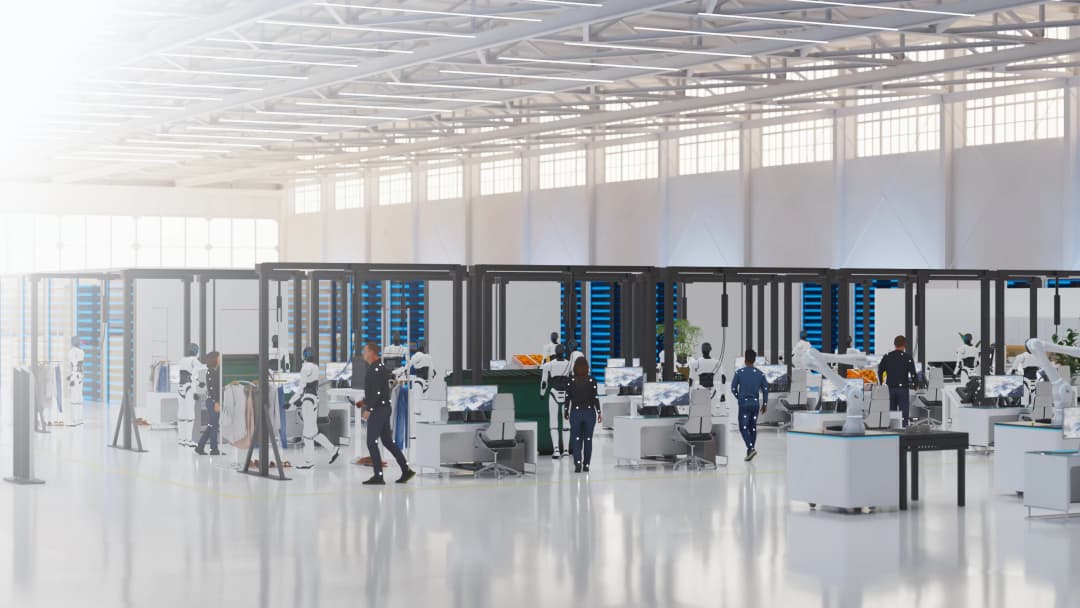
To solve that problem, NEURA built what it calls NEURA Gyms, or training facilities for robots.

The Physical AI Training and Deployment Infrastructure (Image credit: Neura)
Instead of placing a brand new robot directly into a busy factory, engineers create controlled environments where it can practice real tasks under carefully varied conditions. A robot might repeatedly grasp boxes of different weights, navigate changing obstacles, or assemble components that are intentionally positioned slightly differently every time.
The goal isn't simply repetition. It's variation. If every practice attempt looks identical, the robot memorizes one situation. Change the lighting or move an object a few centimetres and performance falls apart. This is what roboticists call the "sim-to-real gap".
Simulation is incredibly useful because robots can practice millions of times inside a computer. The problem is that simulations are never perfect. A virtual cardboard box doesn't bend quite like a real one. Factory floors collect dust. Sensors produce noise. People walk into unexpected places.
A robot that performs flawlessly inside a simulation can struggle the moment it enters a real warehouse.
NEURA Gyms combine physical practice with simulation to narrow that gap. Real-world sensor data is fed back into the training process, while cloud infrastructure, including integration with Amazon SageMaker, helps accelerate the machine learning pipeline.
The gyms produce what NEURA argues is the rarest resource in Physical AI: high-quality data collected from the real world.
The Neuraverse itself
The Neuraverse is the software platform that connects robots together so experience can be shared across an entire fleet.
The basic idea is straightforward. If one robot learns to complete a task safely and reliably, the platform allows that knowledge to be packaged and distributed to other compatible robots instead of starting from scratch each time. NEURA describes this as fleet learning.
The company says every deployment contributes insights back into the network, making future deployments smarter, safer, and more efficient. That network effect is central to the company's vision: the idea that the network gets smarter with every deployment. But at the scale they're describing, it hasn't been demonstrated yet.
Underneath that idea are several software layers.
NEURON OS is the operating system that manages the robot itself.
Aura AI provides contextual intelligence, helping the robot interpret what it sees and decide what to do next.
Neuraverse Sync handles communication between robots, cloud services, and connected devices.
The platform also includes digital twin technology, allowing developers to create virtual versions of robots and their environments for testing before deploying changes into the physical world.

The End-to-End Physical AI Pipeline (Image credit: Neura)
Together, these components support a "build once, deploy many" approach. Instead of creating separate software for every robot model, developers can build a capability once and adapt it across multiple compatible machines. That matters because every new humanoid robotics deployment has historically been a custom engineering project. NEURA wants the platform to reduce that friction.
A real-world test of this approach may come through Amazon. The company is exploring deployments of NEURA robots in selected fulfilment centres to better understand how they perform in complex warehouse environments. The focus is on gathering operational data rather than confirming a large-scale rollout.
The marketplace underneath it all
The Neuraverse isn't just a technical platform. It's also a business model. NEURA wants developers, system integrators, and robotics specialists to build software modules that can be shared through a marketplace. The closest analogy is Apple's App Store.
Instead of downloading a photo editor or weather app, a factory could purchase a certified robotic skill.
A developer writes a welding routine.
Another creates software for sorting mixed parcels.
Someone else builds a pallet-loading workflow.
Those capabilities can be listed on the marketplace and deployed onto compatible NEURA robots without every customer commissioning a custom solution from scratch. If enough developers participate, the value of the platform grows alongside the hardware.
That also changes how the company makes money. Rather than relying primarily on one-time robot sales, NEURA is positioning itself to earn recurring revenue through software, platform services, and marketplace transactions.
One additional piece of that vision is a financial layer developed with Tether, intended to enable machine-to-machine payments between robots and digital services. For now, that remains an early concept compared with the rest of the platform and is the least mature part of the Neuraverse.
The Neuraverse is an attempt to treat robots less like individual machines and more like connected computers. The robot is only one part of the product. The network, the shared learning, and the software ecosystem are the bigger idea.
TL;DR
- Most robots learn in isolation. What one machine figures out doesn't transfer automatically to the next one.
- NEURA Gyms are physical training facilities where robots practice real tasks under varied conditions.
- The Neuraverse is the platform that connects robots so a skill learned by one can be shared across the whole fleet.
- Underneath it are four layers: NEURON OS, Aura AI, Neuraverse Sync, and digital twin tools for testing.
- The marketplace is the business model: developers build certified robot skills and sell them, like an app store for factory capabilities.
- None of this is proven at scale yet.