
Key facts at a glance
- Product: Memo — a domestic humanoid/home-assistant robot
- Launch date: November 19, 2025
- Training approach: Skill Capture Glove (in‑home wearable demonstrations)
- Data scale (claimed): 500+ homes, ≈ 10 million episodes
- Funding announced: US $35M (Benchmark, Conviction among investors)
- Planned beta: Founding Family Beta (~50 households, late 2026)
What makes this release notable
Real‑home data at scale. Instead of relying primarily on lab teleoperation rigs or simulated environments, Sunday emphasizes demonstrations collected in real homes. That moves training data closer to the environments robots must operate in.
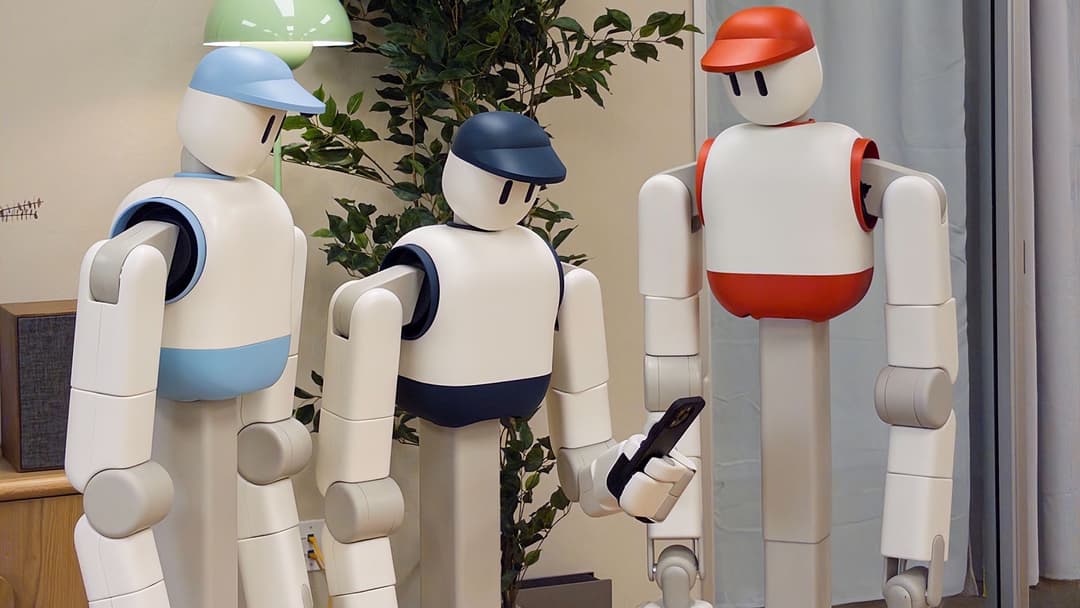
Low‑risk hardware choices. Memo uses a wheeled base and a telescoping torso for vertical reach, plus simple dual grippers and a soft, silicone exterior. Those choices prioritize safety and predictable motion over humanoid mimicry.
Clear product positioning. Sunday presents Memo as a practical home helper — chores and tidy tasks — not as a humanoid designed for theatrical demos or industrial work.
Training approach: the Skill Capture Glove
The central technical claim is straightforward: distribute a lightweight wearable to people in ordinary homes, record how they perform household tasks, and use that human motion data to train robot policies. The company positions this as cheaper and more scalable than traditional teleoperation setups, which are expensive and typically require trained operators.
Why this matters: real homes are messy. Simulations and lab demonstrations often fail to capture everyday clutter, appliance variability, and diverse layouts. A dataset recorded in many homes increases the likelihood that learned behaviors transfer to new, unpredictable environments.
Hardware and design highlights
- Wheeled base: stable, predictable locomotion for flat indoor floors.
- Telescoping spine: vertical reach without unstable bipedal balance.
- Dual grippers: simple, robust end effectors for common objects.
- Soft exterior: silicone cladding and rounded geometry to reduce perceived threat around children and pets.
- Motion style: low‑jerk, low‑acceleration trajectories intended to look calm and safe.
These design decisions reduce complexity and reduce risk in family environments, at the expense of mobility across stairs and uneven terrain.
Beta rollout and availability
Sunday is recruiting a Founding Family Beta and expects to deploy early units to a limited cohort (reported at roughly 50 households) in late 2026. Memo is therefore a proof‑of‑concept and early product, not yet priced or cleared for wide consumer distribution.
Media reaction and market context
Industry and mainstream outlets highlighted the training strategy (gloves + in‑home data) as the most differentiating element of the release. Coverage praised the pragmatic design choices and the focus on real household utility. Analysts and robotics experts praised the data‑first approach while urging caution: demonstrations are compelling, but long‑term robustness and mass‑market costs remain untested.
Risks, unknowns, and critical questions
- Dataset representativeness. Public reports confirm 500+ homes but do not disclose geographic, cultural, or demographic distribution. The diversity of homes affects generalization.
- Privacy & governance. In‑home data collection raises questions about consent, storage, anonymization, and long‑term use. Details have not been fully published.
- Long‑term reliability. Demonstrations show task success; independent, long‑duration evaluations are not yet available.
- Cost & maintenance. No retail pricing has been announced. Early units are likely expensive to produce and support.
Conclusion
Sunday’s Memo launch is a pragmatic step toward usable home robots: hardware choices that minimize risk, and a data strategy that targets real‑world variability. The release is significant but preliminary — the technology will be validated only after broader beta testing, transparent evaluations, and clear answers on data governance and pricing.