
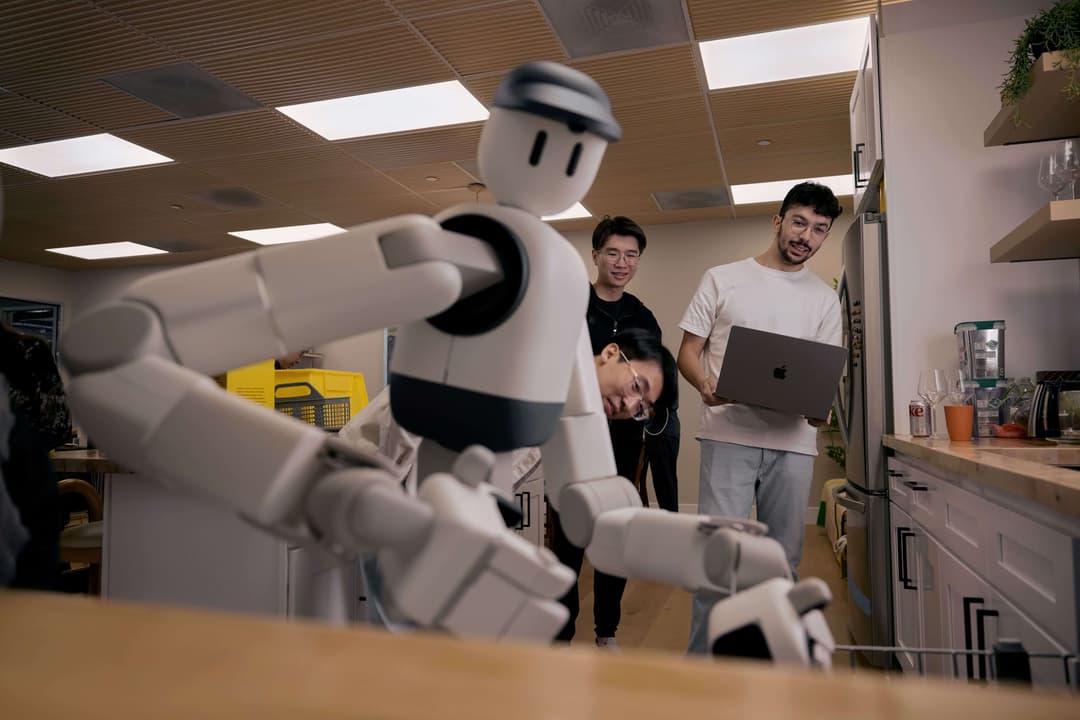
Most home robots learned in labs. Memo learned in kitchens.
Sunday Robotics built Memo around a specific bet: that the reason home robots keep failing isn't hardware — it's training data. Simulations and controlled test rooms don't capture how people actually live. Real homes are cluttered, inconsistent, and full of objects that don't behave the way they do in a physics engine. So Sunday Robotics skipped the sim and went straight to source.
The Headline Feature: Learning Chores from Human Hands
The tool they built for this is the Skill Capture Glove. A person wears it while doing a normal household task — loading the dishwasher, clearing a table, folding laundry. Every hand movement is recorded. Memo learns to replicate those actions with its own arms. According to Sunday Robotics, if you can do it wearing the glove, Memo can learn it.
"If you can do it wearing the glove, Memo can learn it."
— Tony Zhao, CEO, Sunday Robotics
That's the claim. The logic underneath it is solid: robots trained on real human behaviour in real environments should generalise better to real environments. Whether Memo actually delivers that is what the trials will show.
Why it works (in theory)
The usual way to teach a robot a new task is slow and expensive. Engineers write scripts, build simulations, run thousands of iterations, and still end up with a robot that struggles the moment something deviates from the training setup. Sunday Robotics' approach cuts most of that out. Non-engineers can teach Memo. The training data comes from the environment the robot will actually work in, not an approximation of it.
The result, Sunday Robotics says, is a robot that learns what real kitchens look like — how dishes are actually stacked, how fragile objects get handled by real people in a hurry. Not how chores should be done. How they are done.
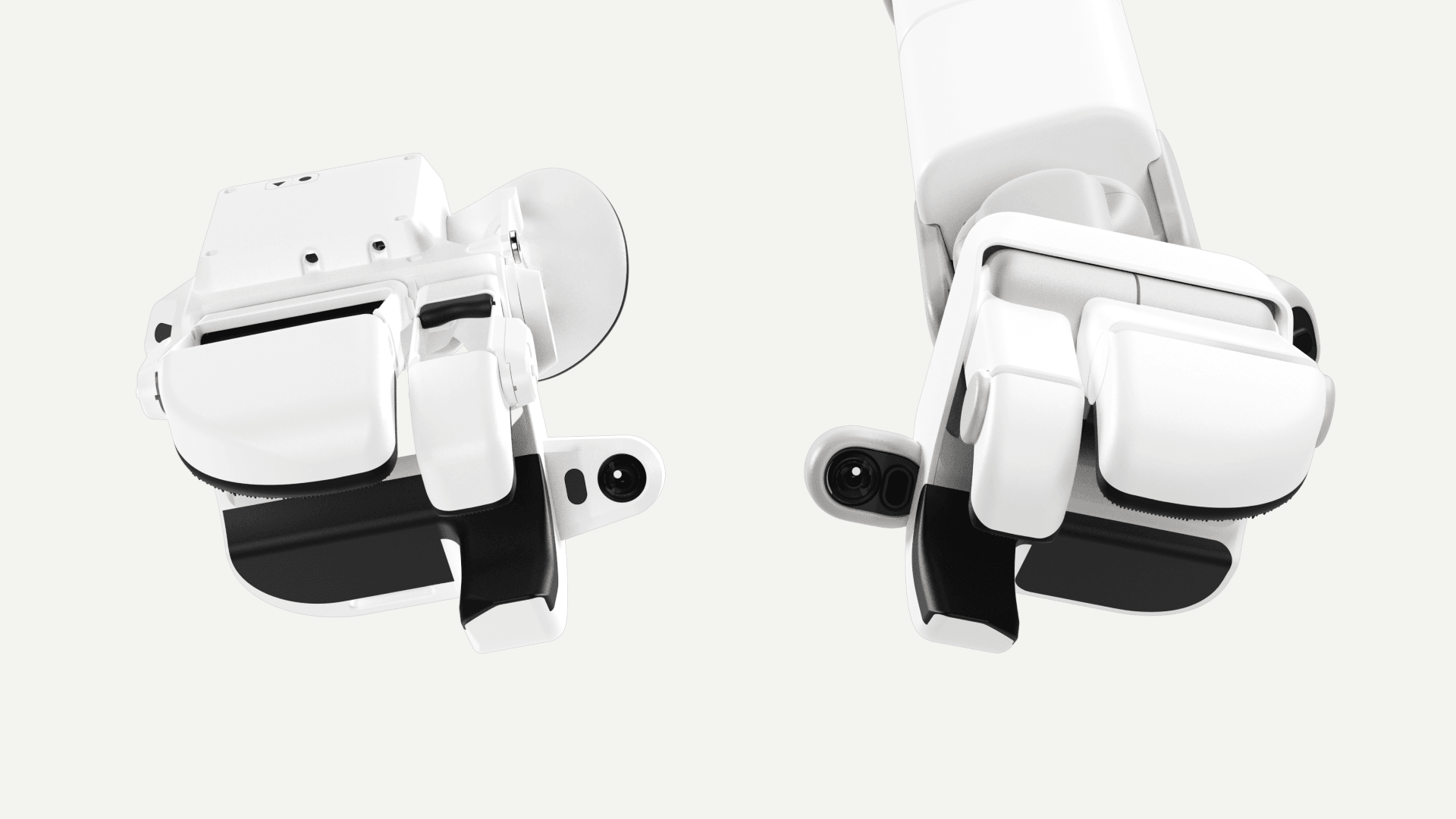
Skill Capture Glove (left) and Memo's hand (right) (Image credit: Sunday Robotics)
What it doesn't solve
The glove-based training has a real weakness: garbage in, garbage out. If someone demonstrates a task poorly, Memo learns the poor version. The quality of the training depends entirely on whoever's doing the teaching, which matters when you're selling into thousands of different homes with thousands of different habits.
Memo also moves slower than a human, struggles in heavily cluttered spaces, and can lose its grip when something slips unexpectedly. Full independence is the target, not the current state. Right now, Memo is a learning system that happens to be in a robot body.
Other Notable Capabilities
Memo moves on wheels instead of legs, which keeps it stable and safe indoors.
It uses two arms designed for careful handling of fragile items.
It can reach low shelves and kitchen counters with its adjustable height.
It is built to stop safely if power is lost or if it bumps into something.
Memo at a glance
- Robot name: Memo
- Company: Sunday Robotics
- Category: Home humanoid-style robot
- Mobility: Wheeled base
- Status: Early-stage product with limited home trials planned ## Other Capabilities
Mobility. Memo runs on a wheeled base rather than legs — more stable, less theatrical, better suited to the flat floors of actual homes.
Arms. Two arms built for careful handling of fragile items. The design priority is grip reliability over speed.
Reach. Adjustable height lets it access low shelves and kitchen counters. The physical envelope covers the tasks most people actually need done.
Safety. Built to stop if it loses power or makes unexpected contact. In a home with children or pets, that's not optional.
Known Deploymentss
Household chore demos. Sunday Robotics has released videos of Memo clearing tables, loading dishwashers, handling wine glasses, and making coffee. The company says these were filmed in real homes rather than staged labs — that claim is Sunday Robotics' own description. The demos prioritise steady, careful movement over speed, which is either a sign of design maturity or a way to avoid showing failure modes at pace. Both things can be true.
Fabric handling. Memo has been shown folding socks and handling clothes. Fabric is one of the hardest manipulation problems in robotics — it deforms constantly and doesn't behave predictably. That Sunday Robotics is demoing it suggests confidence. Whether it holds up in a real laundry pile is another question.
Founding family programme. Sunday Robotics has announced a small private programme where Memo will be tested in real homes over longer periods. This is a private beta, not a consumer launch. No pricing, no release date.
Market status: Private beta. No public pricing or timeline announced.
Outlook
Memo is a narrow bet, clearly placed. Sunday Robotics isn't trying to build the most capable humanoid — they're trying to build the one that actually gets used. Wheeled base, real-home training, glove-based teaching by non-engineers. Every design choice points at the same goal: get into homes and stay there.
The honest question is whether the glove training approach scales. Teaching Memo works when the teacher is patient and consistent. Whether it works across thousands of households, with thousands of different habits and kitchen layouts, is what the founding family programme is supposed to answer.
Short demos are easy to make look good. Weeks and months in a real home are not. That's the test Memo hasn't passed yet — because it hasn't taken it yet.