
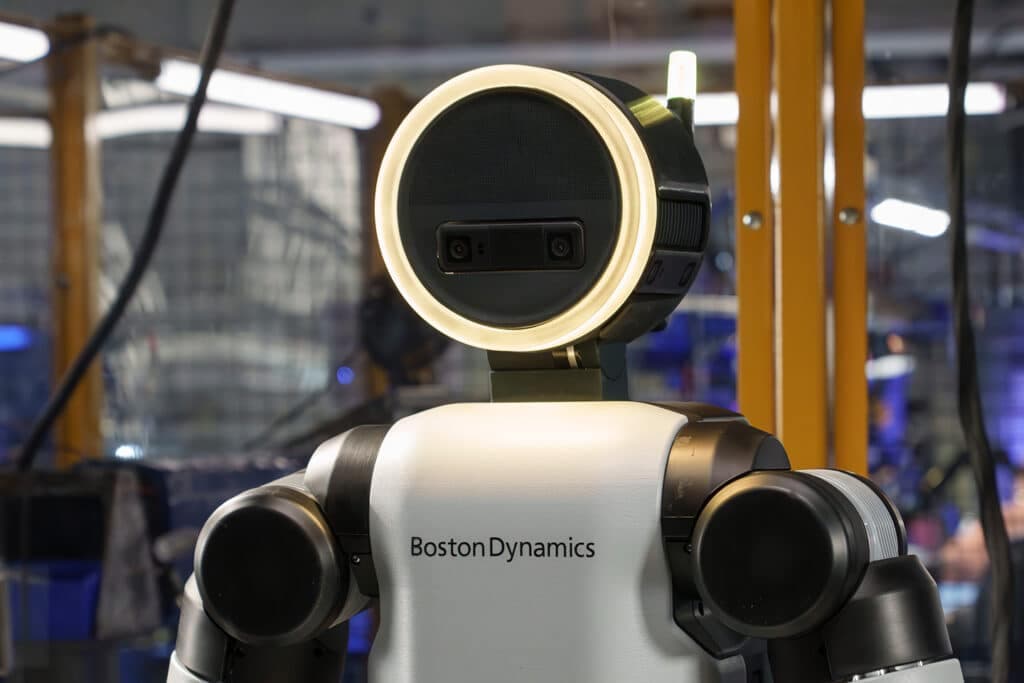
Boston Dynamics spent years making Atlas do impressive things like backflips, parkour, gymnastics routines that went viral and told you almost nothing about whether the robot could be useful. At CES 2026, they showed something different: a production-ready Atlas designed for factory floors, doing sequences of actual work.
The version that matters now isn't the acrobat. It's the one that can chain tasks together, adapt when something shifts, and keep going without a human resetting it between steps.
The Headline Feature: Task sequencing without constant handholding
Most industrial robots replay fixed motions. They're fast and precise, but if a part is in the wrong place or a colleague walks through the work cell, they stop and wait. Atlas is built around a different model. According to Boston Dynamics, it watches the scene, identifies what comes next, and continues working when things change.
That's a meaningful gap from where most humanoids are right now. Demo robots do one impressive thing. Atlas, as shown at CES 2026, was doing strings of actions in sequence.
The other piece is the Google DeepMind partnership. Boston Dynamics is working with DeepMind to improve how Atlas handles higher-level instructions. The goal, per both companies, is to teach Atlas a task once and have that skill transfer to similar jobs without custom reprogramming each time. Faster setup when the task changes, less engineering overhead per new deployment. That's the claim. The research is ongoing.
Why it works (on a real factory floor)
Factory environments don't hold still. Parts get moved, workers cross the work cell, the layout shifts between shifts. A robot that can only execute pre-programmed motion sequences needs constant babysitting — an engineer on standby to reset it when reality diverges from the script. A robot that can handle small surprises independently is worth more, not because it's clever, but because it doesn't generate support tickets.
Boston Dynamics says Atlas reduces tuning time and downtime by handling that messiness itself. Whether that holds up across weeks of real deployment rather than a CES stage is what the Hyundai pilots are supposed to show.
What it doesn't solve
Atlas is not a general-purpose robot. It's starting with structured, repetitive tasks in controlled factory environments, with human oversight. Safety certification, long-term reliability data, and unit cost are all unresolved at scale. It's not replacing skilled technicians. It's not going anywhere near a home.
Other Notable Capabilities
Movement. Atlas walks with a stability and fluid motion range that's suited to tight industrial spaces — the kind that weren't designed for robots and won't be redesigned for them. That's a genuine advantage over wheeled systems that can't navigate stairs or uneven surfaces.
Manipulation. Hands and arms built for part handling and positioning. The dexterity isn't surgical, but it covers the reach-and-place tasks that are common in automotive and logistics settings.
Power. Designed for long shifts with quick battery swaps. Boston Dynamics hasn't published detailed runtime figures publicly, but the design intent is shift-length operation rather than hour-long demo windows.
TL;DR
- Production-ready humanoid shown at CES 2026
- Built for industrial and logistics tasks, not consumer chores
- Designed to run tasks with limited human intervention
- Backed by Boston Dynamics, Hyundai, and AI work with Google DeepMind
- Early pilots are in controlled factory environments
Known Deployments
CES 2026, Las Vegas. Boston Dynamics demonstrated Atlas executing task sequences on stage — the clearest public look yet at the production hardware handling a chain of actions rather than isolated stunts. This is a demo, not a deployment.
Hyundai manufacturing pilots. Hyundai is an early partner and is slated to run Atlas in factory settings for part movement and sequencing tasks. These pilots target predictable, repetitive steps where Atlas's balance and reach are the actual advantage. "Slated" is the operative word — these are planned pilots, not confirmed running deployments.
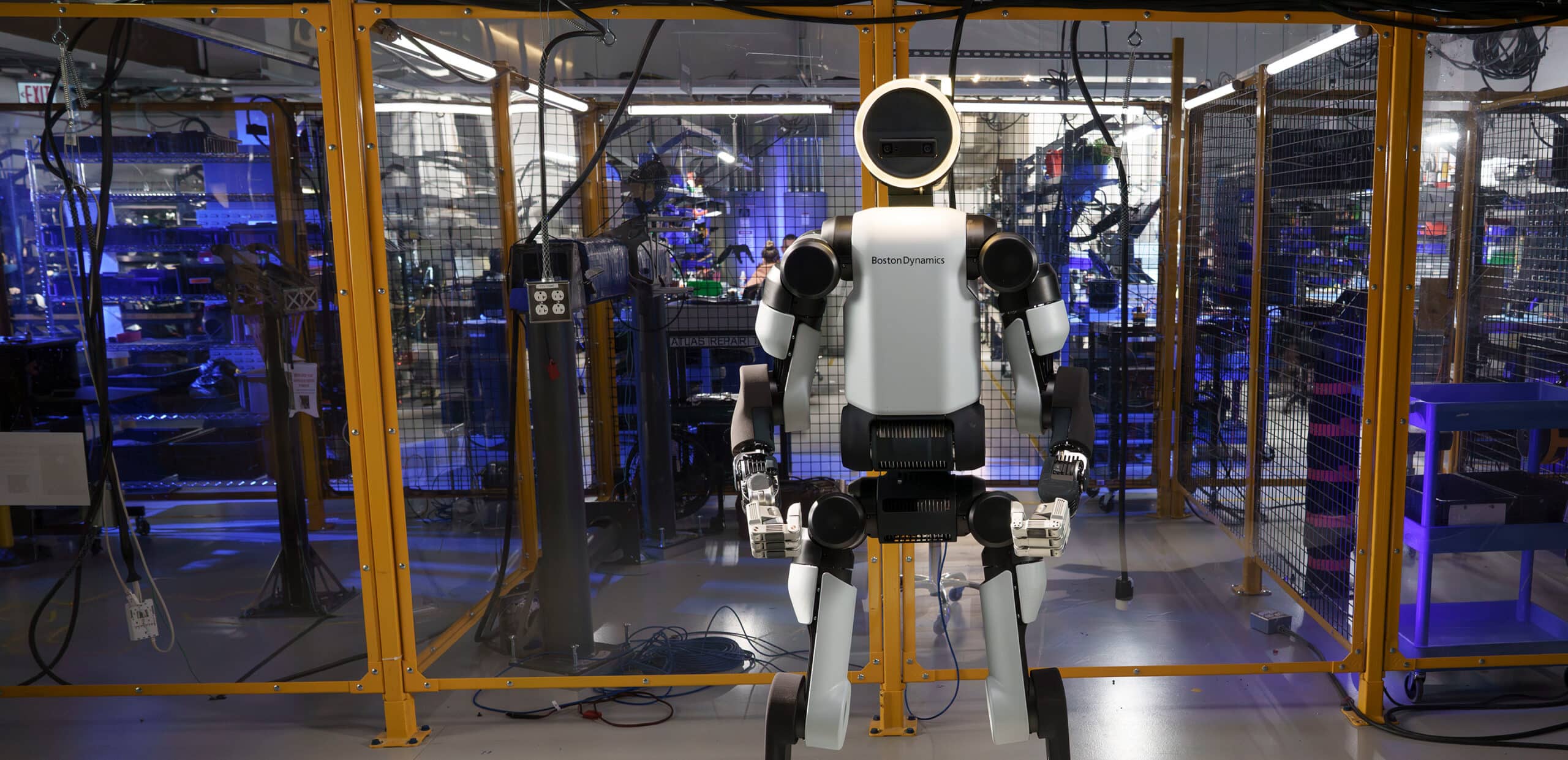
Boston Dynamics Atlas on a factory floor (Image credit: Boston Dynamics)
Google DeepMind research fleet. Atlas will be part of research programmes focused on instruction generalisation — teaching skills that transfer across similar tasks. The partnership was announced; the research is in progress. Announcement on Boston Dynamics blog.
Outlook
"A robot that knows the next step is worth more than one that only looks impressive."
That line captures where Boston Dynamics is pointing Atlas. The backflips were marketing. This is the product.
The honest position is: Atlas at CES 2026 is the most credible industrial humanoid Boston Dynamics has shown. The Hyundai pilots will be the first real test of whether "operational autonomy" in a controlled demo translates to operational autonomy in a factory that doesn't care about the demo. If it does, the Google DeepMind work on skill transfer makes the scaling story credible. If it doesn't, this is another impressive robot that's further from the shop floor than the stage makes it look.
Boston Dynamics has more credibility in this space than almost anyone. That's not a guarantee, it's just the highest bar anyone's cleared so far.