
TL;DR
- XPENG’s IRON humanoid demonstrates high anthropomorphism and leverages automotive engineering and software to accelerate robotics development.
- EThe demonstration raised authenticity skepticism; XPENG responded with transparency and pragmatic deployment plans focused on controlled commercial roles rather than broad autonomy.
- The strategic significance lies in technology convergence (EV → robotics), on-device privacy assurances, and realistic near-term applications.
Introduction
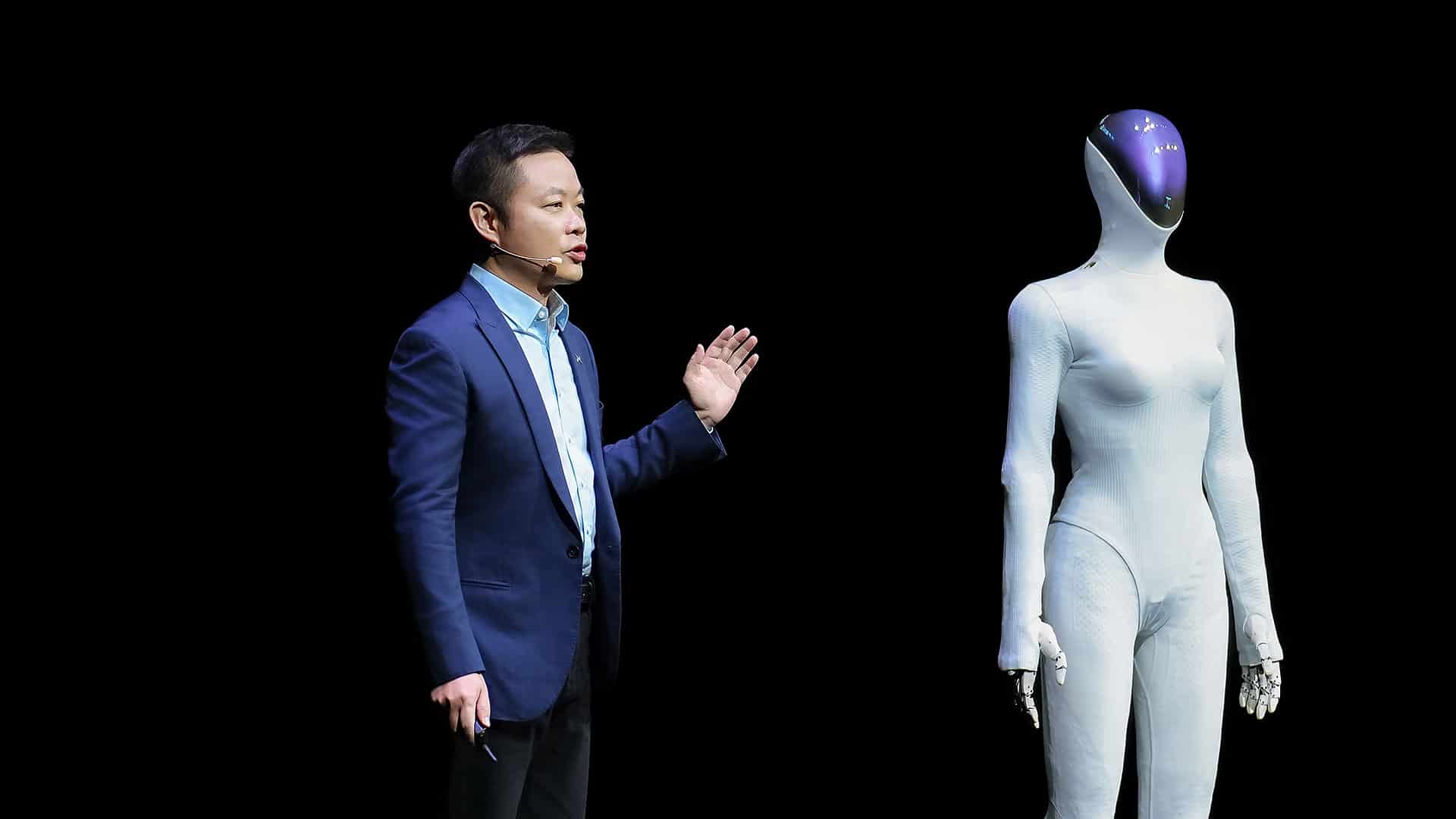
XPENG’s IRON prototype generated intense public scrutiny when a polished stage demo prompted debate about authenticity. Beyond the spectacle, IRON is a deliberate product of an automotive manufacturer applying vehicle‑grade systems engineering, supply chain scale, and compute architecture to humanoid robotics. That convergence matters more than one demo.
Key technical features
Extreme anthropomorphism: full‑scale human proportions, 1:1 hand sizing, and joint kinematics designed to operate in human‑centric environments without extensive modifications.
Automotive-grade compute and power: IRON uses XPENG’s in‑house AI SoCs and a Physical‑World large model adapted from vehicle autonomy stacks. Power is supplied by an all‑solid‑state battery chosen for safety and energy density in human‑proximate operation.
Mechanics optimized for appearance and compatibility: small bevel‑gear joints and compact actuation enable humanlike silhouettes while maintaining mechanical durability appropriate for showroom and low‑risk industrial tasks.
On-device privacy guarantee: a product promise that raw sensor data will not be exfiltrated from the device, intended to address commercial and consumer trust barriers.
Authenticity and demonstration management
A high‑polish demo created controversy. XPENG mitigated skepticism through staged transparency: audible system artifacts, hardware inspections, and public exposure of internal components. This is a case study in demo‑risk management: when robots look convincingly human, firms must pair showmanship with verifiable technical evidence.
Commercial strategy and initial use cases
XPENG is targeting limited, controlled deployments rather than broad, unsupervised field autonomy. Initial roles include:
- Retail greeter and showroom assistant
- Receptionist and tour guide in controlled venues
- Inspection and observational roles in industrial partnerships (e.g., materials or plant inspection)
This choice reflects a pragmatic assessment of current capabilities, cost, and safety/regulatory constraints.
Strategic implications
Vertical transfer of capability: automakers possess manufacturing scale, supply chains, and chip development experience that shorten hardware commercialization timelines for humanoids.
Dataset and modeling reuse: physical‑world models and perception stacks developed for vehicles provide a ready baseline for robotics perception and control—especially for navigation and environment representation.
Market positioning: by emphasizing anthropomorphism and consumer trust (privacy guarantees), XPENG positions IRON for human-facing commercial roles where appearance and social acceptance matter.
Risk profile: heavy reliance on automotive assumptions can introduce mismatches—vehicles operate in constrained roadways and sensor configurations; humanoids operate in highly unstructured, contact‑rich environments.
Current practical limitations
- Energy and thermal constraints still cap duty cycles compared to fully optimized industrial systems.
- Robust manipulation and dexterous, general‑purpose task execution remain limited outside structured scenarios.
- Cost of production and maintenance will restrict early deployments to premium, controlled environments.
Conclusion
XPENG’s IRON is strategically important not because it is the first flawless humanoid, but because it demonstrates a credible pathway: automotive engineering, manufacturing scale, and domain‑adapted AI can materially accelerate the commercialization of human‑scale robots. Evaluate IRON accordingly—significant in systems approach, limited in near‑term autonomy.